
Gabapentin Dosage for Cats Calculator
Gabapentin is one of the most commonly prescribed medications for cats — used for pain relief, chronic pain management, vet-visit anxiety, and seizure control. Because dosing varies significantly by condition and your cat’s weight, our calculator gives you a personalised reference dose in both mg and ml — instantly, for free.
My cat has kidney disease (CKD)
Dose reduction required — gabapentin is renally cleared
Select your cat’s weight and condition above, then click Calculate.
 Anxiety:  weight × 10–20 mg/kg
 Acute pain: weight × 5–10 mg/kg
 Chronic pain: weight × 5 mg/kg
 Seizures: weight × 2.5–5 mg/kg
 ml = mg dose ÷ concentration
 CKD cats: dose × 0.75 (25% reduction)
 No hard mg ceiling — purely weight-based
Ranges are from JAVMA 2017–2022 peer-reviewed studies. Anxiety range is 10–20 mg/kg — 20 mg/kg is the most-studied upper dose (van Haaften et al., Gurney 2022), but some cats are started lower. Pain doses are titrated from the low end upward under vet guidance. The safety ceiling from published studies is ~50 mg/kg — no arbitrary mg cap is applied.
- Enter cat’s weight in kg or lb (lb auto-converts: ÷ 2.205)
- Select the condition — each has a different validated mg/kg range
- Calculator multiplies weight × mg/kg to get dose in mg
- If liquid: divides mg by concentration (mg/ml) to get volume in ml
- CKD modifier: reduces output by 25% if kidney disease selected (some vets prefer interval extension instead — confirm with your vet)
- Warning shown if weight exceeds 8 kg — uncommon and worth double-checking
- Timing and frequency displayed based on condition selected
Dosage Reference
Gabapentin Dosage Chart for Cats
by Weight — mg & ml
Use this chart to find the standard gabapentin dose for your cat by weight and condition. All values calculated at the clinically recommended mg/kg range. Switch between purposes using the tabs below.
| Cat Weight | Dose at 20 mg/kg (upper end) | At 100 mg/ml (ml) | At 50 mg/ml (ml) | Timing | Notes |
|---|---|---|---|---|---|
| 2 kg (4.4 lb) | 40 mg | 0.40 ml | 0.80 ml | 1–2 hrs before visit | Some cats need only 20mg (10 mg/kg) |
| 3 kg (6.6 lb) | 60 mg | 0.60 ml | 1.20 ml | 1–2 hrs before visit | Some cats need only 30mg (10 mg/kg) |
| 4 kg (8.8 lb) | 80 mg | 0.80 ml | 1.60 ml | 1–2 hrs before visit | Some cats need only 40mg (10 mg/kg) |
| 5 kg (11 lb) | 100 mg | 1.00 ml | 2.00 ml | 1–2 hrs before visit | Most common dose. Lower end: 50mg. |
| 6 kg (13.2 lb) | 120 mg | 1.20 ml | 2.40 ml | 1–2 hrs before visit | Some cats need only 60mg (10 mg/kg) |
| 7 kg (15.4 lb) | 140 mg | 1.40 ml | 2.80 ml | 1–2 hrs before visit | Some cats need only 70mg (10 mg/kg) |
| 8 kg (17.6 lb) | 160 mg | 1.60 ml | 3.20 ml | 1–2 hrs before visit | Some cats need only 80mg (10 mg/kg) |
- Highlighted row = average 5 kg cat (most common adult cat weight)
- ml values calculated at 100 mg/ml — the most common compounded concentration for cats. Adjust if your liquid is a different strength.
- Anxiety table shows the upper-end dose (20 mg/kg). The clinical range is 10–20 mg/kg — some cats, especially those sensitive to sedation, may need only 10–15 mg/kg. Do a trial dose 24–48 hrs before the actual appointment.
- Sedation is gabapentin’s #1 side effect — expect your cat to be sleepy for 6–8 hours after dosing, especially at anxiety doses. This is normal and expected. Contact your vet if sedation is severe or lasts beyond 24 hours.
- CKD cats: reduce dose by 25% OR extend the dosing interval — gabapentin is renally cleared and can accumulate. Confirm approach with your vet.
- Never use human pharmacy liquid gabapentin — it may contain xylitol which is harmful to cats
- Sources: JAVMA 2017, van Haaften et al. 2019, Gurney 2022, SingleCare DVM-reviewed dosing guidelines
What Does Gabapentin Do for Cats?
Uses, Timing, Side Effects & Safety
Gabapentin is one of the most widely prescribed medications in feline medicine — yet most cat owners don’t fully understand what it does, how fast it works, or what to watch for. This guide covers everything you need to know before giving gabapentin to your cat.
🧬 What Does Gabapentin Do for Cats?
Gabapentin is an anticonvulsant and analgesic medication originally developed for humans. In cats, vets use it primarily for pain management, anxiety reduction, and seizure control. It works by binding to calcium channels in the nervous system, which reduces the release of excitatory neurotransmitters — essentially calming overactive nerve signals that cause pain or fear responses.
Unlike opioids or NSAIDs, gabapentin does not damage the kidneys or gastrointestinal tract with long-term use, which makes it a popular choice for cats who need ongoing pain control — particularly senior cats with osteoarthritis, cancer pain, or post-surgical discomfort.
Vets prescribe gabapentin for cats in four main situations:
- Gabapentin for cat pain relief — post-surgical, arthritis, neuropathic, and cancer pain
- Gabapentin for cats anxiety — vet visit stress, carrier phobia, travel anxiety, and environmental changes
- Gabapentin cats pain relief — chronic conditions — ongoing osteoarthritis and degenerative joint disease in senior cats
- Gabapentin use in cats for seizures — as adjunct therapy alongside primary antiepileptic drugs like phenobarbital
⏱️ How Long Does Gabapentin Take to Work in Cats?
Most cat owners see gabapentin start to work within 1 to 2 hours of administration. For vet-visit anxiety — the most common single-dose use — vets recommend giving the medication 1.5 to 2 hours before the appointment or car journey to allow full absorption.
30 minutes — absorption begins
Gabapentin starts entering the bloodstream. Some cats begin to show mild sedation at this stage.1 hour — effects begin
Most cats show visible calming at 1 hour. Pain relief begins. Ideal time to start travel or leave for the vet.1.5–2 hours — peak effect
Maximum sedation and anxiety reduction. This is when vet appointments work best — timing your visit here gives the best outcome.How long does gabapentin last in cats?
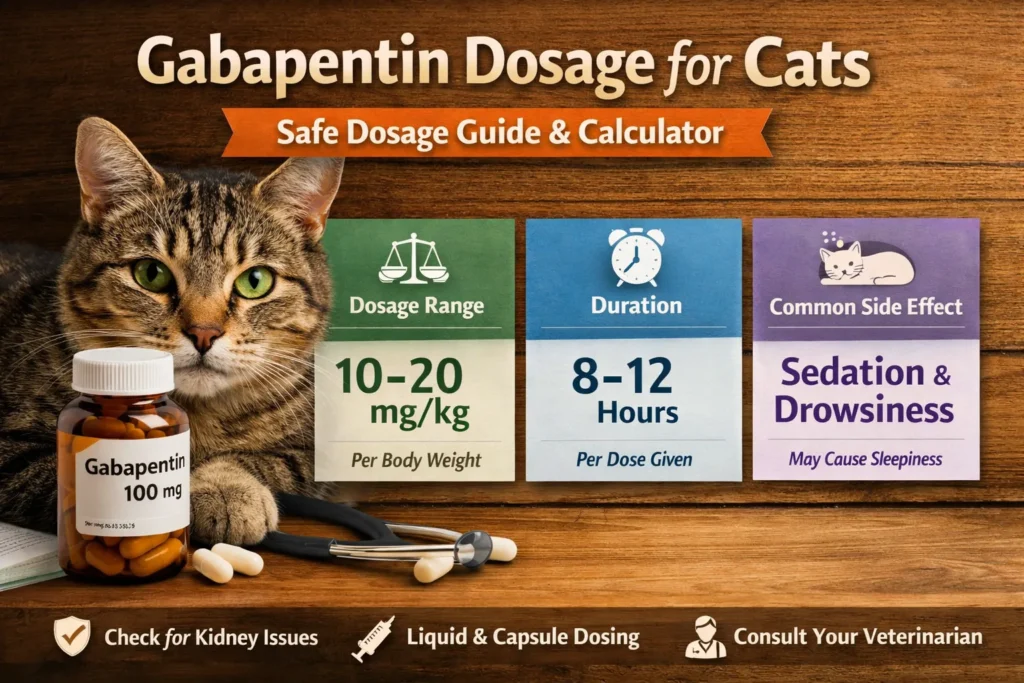
The effects of gabapentin typically last 8 to 12 hours in cats. For pain management, this is why vets prescribe it every 12 hours (twice daily). Sedation usually wears off within 6–8 hours for most cats.⚠️ Gabapentin for Cats Side Effects
Gabapentin is generally well-tolerated in cats. The most common side effect is sedation — which is actually the desired outcome for anxiety use, but can be unexpected if owners don’t know what to expect for pain management doses. Here’s a full breakdown:
- Sedation / sleepiness
- Wobbly gait (ataxia) at higher doses
- Reduced appetite temporarily
- Mild lethargy for 4–8 hours
- Vomiting or drooling
- Hiding or confusion
- Excessive sedation (especially CKD cats)
- Unusual vocalization
- Difficulty breathing
- Complete loss of coordination
- Unresponsive or will not wake
- Symptoms lasting more than 24 hrs
- Does not directly damage kidneys, but requires dose adjustment in cats with kidney disease
- No significant liver toxicity reported in cats at standard doses
- Safe for long-term pain management
- Monitor tolerance every 3–6 months
🛡️ Is Gabapentin Safe for Cats? What You Must Know
Yes — gabapentin is safe for cats when prescribed and dosed correctly. It is an FDA-approved human medication used off-label in cats, which is standard practice in veterinary medicine for many of the most effective feline treatments (prednisolone, mirtazapine, and many others are also used off-label).
There are, however, several critical safety points every cat owner must understand before administering gabapentin:
- Cats with kidney disease (CKD) need a reduced dose — gabapentin is cleared renally. Our calculator applies a 25% reduction automatically.
- Pregnant or nursing cats should not receive gabapentin — safety in pregnancy has not been established in cats.
- Do not stop suddenly after long-term use — taper the dose gradually with vet guidance to avoid rebound pain or neurological effects.
- Drug interactions — gabapentin may increase sedation when combined with opioids, benzodiazepines, or other CNS depressants. Tell your vet about all medications your cat takes.
- Calming cats with gabapentin does not mean the anxiety issue is resolved — long-term anxiety in cats needs a broader behavioural management plan alongside medication.
Frequently Asked Questions
Gabapentin for Cats — FAQ
Answers to the most commonly searched questions about gabapentin dosage, how fast it works, how long it lasts, and whether it’s safe for your cat.
- Vet anxiety / calming: 20 mg/kg — one dose given 1–2 hrs before the appointment. A 5kg cat typically receives 100mg.
- Acute pain: 5–10 mg/kg every 12 hours. Start at the low end and increase only under vet supervision.
- Chronic pain: 5 mg/kg every 12 hours, ongoing with regular vet monitoring.
- Seizures (adjunct): 2.5–5 mg/kg every 8–12 hours alongside primary antiepileptic.
- 3kg cat — anxiety dose: 0.60 ml
- 4kg cat — anxiety dose: 0.80 ml
- 5kg cat — anxiety dose: 1.00 ml (100mg — the most commonly prescribed dose)
- 6kg cat — anxiety dose: 1.20 ml
- Have blood and urine checked every 6 months for cats on long-term gabapentin
- Watch for tolerance — some cats need dose adjustments over time
- Never stop abruptly after long-term use — taper gradually
- Cats with worsening CKD may need periodic dose reductions
Get Your Cat’s Exact Dose
Use our free calculator — enter weight and condition, get the mg and ml result instantly.
Use the Calculator