
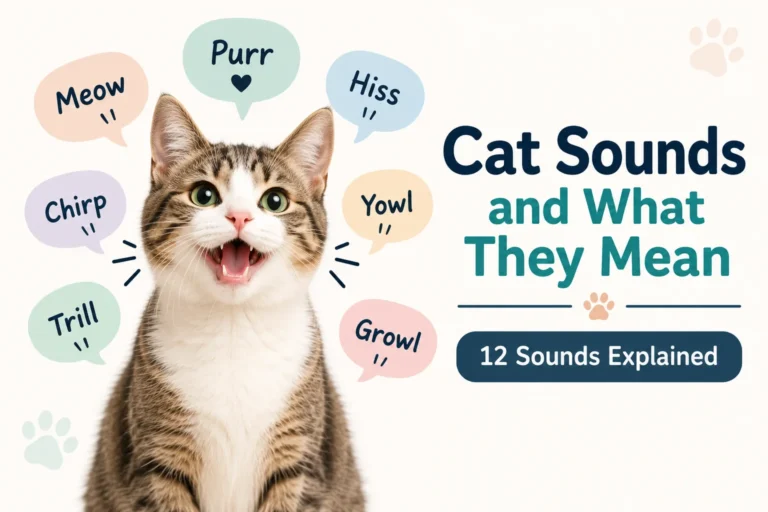
Quick answer: Cats make over a dozen distinct sounds, and each one carries a different message. Meows are requests aimed at humans, purrs usually signal contentment, trills are friendly greetings, chirps show hunting excitement, and hisses or growls are clear warnings. The pitch, length, and situation tell you what your cat means.
Researchers have recorded more than 20 different vocalizations in domestic cats, which makes them one of the most vocal carnivore species on the planet. Yet most owners only ever learn two of them: the meow and the purr.
The good news is that cat sounds follow consistent patterns. Once you know the 12 core sounds, you can read your cat’s mood and needs with surprising accuracy. This guide covers each sound, what it means, and when it signals a problem.
The 12 cat sounds and their meanings
1. Meow
The all purpose request. Adult cats meow almost exclusively at humans, not at other cats. A short meow is a greeting, repeated meows show excitement, and a long drawn out meow is a demand for food, a door, or attention.
We covered this sound in depth in our guide on why cats meow so much.
2. Purr
The most famous cat sound, produced by rapid vibration of the vocal folds at 25 to 150 Hz. Purring usually means contentment, but cats also purr to soothe themselves when stressed, sick, or in pain. A cat that purrs while hiding, refusing food, or breathing fast may be self comforting, not happy. Context decides the meaning.
3. Trill
A rolling, musical sound made with a closed mouth, halfway between a meow and a purr. Mother cats use it to call kittens. Adult cats trill to greet people they like and to say “follow me.” A trilling cat is a happy cat.
4. Chirp and chatter
The rapid clicking or chattering sound cats make while watching birds through a window. It signals intense hunting excitement mixed with frustration at prey they cannot reach. Some researchers believe it mimics bird calls or rehearses the killing bite. It is completely normal.
5. Hiss
An unmistakable warning that means “back off now.” Cats hiss when they feel threatened, cornered, or surprised. A hiss is defensive, not aggressive. Give the cat space and the situation usually deescalates on its own.
6. Growl
A low rumbling sound that escalates the hiss. A growling cat feels seriously threatened and will defend itself if pushed. Never reach for a growling cat. Remove the threat or let the cat retreat.
7. Yowl
A long, loud, drawn out moan. Yowls carry across distance and mean serious business: territorial disputes, mating calls, disorientation in senior cats, or pain. A senior cat that starts yowling at night needs a vet visit to rule out hyperthyroidism, high blood pressure, or cognitive decline.
8. Caterwaul
The wailing, almost human cry of an unspayed female in heat. Nearby unneutered males answer with their own yowls. Spaying ends caterwauling permanently, usually within weeks.
9. Spit
A short explosive burst that often accompanies a hiss when a cat is startled at close range. It is the feline equivalent of a shocked shout. It passes as soon as the threat does.
10. Shriek or scream
A sudden sharp cry that means acute pain or a fight. If your cat shrieks when touched in a specific spot, when jumping, or when using the litter box, book a vet appointment. A cry in the litter box in a male cat can mean a urinary blockage, which is an emergency.
11. Mew
The high thin cry of kittens calling their mother for warmth, food, or comfort. Kittens mew constantly in their first weeks and grow out of it as their adult voice develops.
12. Snore and sleep sounds
Soft snoring is normal in relaxed cats, and flat faced breeds like Persians snore more because of their short airways. Loud new snoring, mouth breathing, or wheezing while awake is different and deserves a vet check.
Cat sounds at a glance
| Sound | Mood | What your cat means |
|---|---|---|
| Meow | Neutral to friendly | “I want something from you” |
| Purr | Content, sometimes stressed | “I feel good” or “I am soothing myself” |
| Trill | Happy | “Hello” or “follow me” |
| Chirp / chatter | Excited | “I see prey I cannot reach” |
| Hiss | Scared | “Back off” |
| Growl | Threatened | “Final warning” |
| Yowl | Distressed | “Something is wrong” or a territory claim |
| Caterwaul | Hormonal | “I am in heat” |
| Shriek | Pain | “That hurt” or a fight |
| Mew | Needy (kittens) | “Mom, I need you” |
🐱 Not sure what your cat just said?
Pick the sound and body language you observed and our free Cat Language Translator gives you the most likely meaning instantly.
Try the Cat Language TranslatorBody language changes what a sound means
The same sound can carry different messages depending on what the body does. Read them together:
- Tail straight up plus meow or trill means a confident, friendly greeting.
- Tail puffed plus hiss means genuine fear. Give space immediately.
- Slow blinking plus purr means deep trust and relaxation.
- Ears flat plus growl means the cat will strike if approached.
- Purring plus hunched posture and hiding can mean pain. Purring alone never guarantees a happy cat.
When cat sounds signal a health problem
Sound changes are one of the earliest signs owners notice before a diagnosis. Watch for these patterns:
- New night yowling in a cat over 10 points to hyperthyroidism, high blood pressure, or cognitive decline.
- Crying in the litter box can mean a urinary problem. In male cats, treat it as an emergency.
- A hoarse, weak, or missing meow can mean laryngitis, an upper respiratory infection, or in rare cases a growth on the vocal cords.
- A quiet cat becoming very vocal, or a talkative cat going silent, signals that something changed internally.
- Constant purring in a cat that hides and refuses food can be self soothing from pain.
Age matters when judging these changes. A behavior that is normal in a 2 year old cat can be a warning sign in a 14 year old. Check your cat’s true life stage with our cat age calculator to know which age related conditions to watch for.
1 thought on “Cat Sounds and What They Mean: 12 Sounds Explained”