
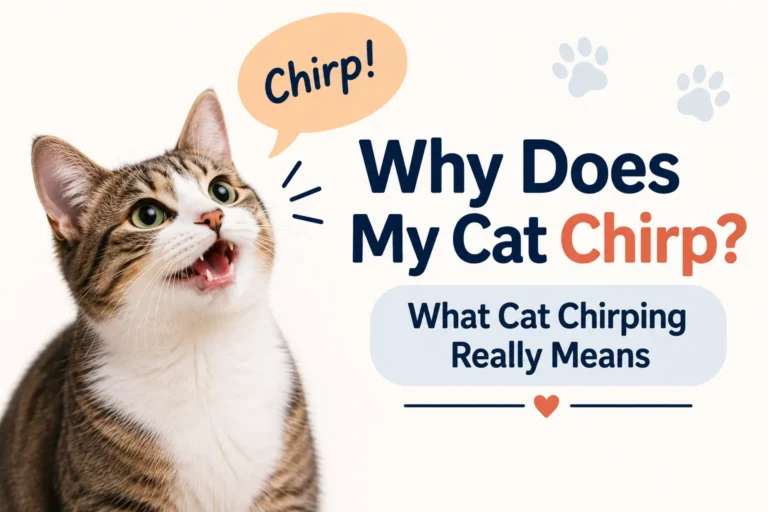
Quick answer: Cats chirp for two main reasons. The rapid chattering chirp at a window shows hunting excitement at prey your cat cannot reach. The soft musical chirp or trill aimed at you is a friendly greeting that mother cats use to call their kittens. Both are normal, healthy sounds, and neither needs correction.
Your cat sits at the window, locks eyes on a bird, and suddenly produces a strange stuttering click, like a tiny machine gun made of squeaks. Or your cat walks into the room and greets you with a short musical brrrp instead of a meow.
Both sounds get called chirping, and owners often worry that something is wrong. Nothing is. Chirping sits among the friendliest and most instinct driven sounds a cat makes. Here is what each type means and where it comes from.
The two types of cat chirping
1. The hunting chirp (chattering at birds)
This is the rapid clicking, chattering sound cats make while staring at birds or squirrels through a window. The jaw vibrates quickly, the eyes lock on, the tail often twitches, and some cats crouch as if ready to pounce.
It happens when your cat sees prey it cannot reach. The glass blocks the hunt, and the chirp releases that charged up energy. Researchers offer three explanations, and they may all be partly true:
- Frustration release. The cat’s hunting sequence is triggered but cannot finish, so the tension escapes as sound.
- Kill bite rehearsal. The rapid jaw motion mirrors the fast bite cats use to dispatch prey, so the chirp may be a reflex rehearsal.
- Prey mimicry. A 2010 study of wild margay cats in the Amazon recorded them imitating the calls of monkeys they hunted, so some scientists think domestic cats may imitate bird sounds to lure prey closer.
2. The greeting chirp (trill)
The second chirp is softer and musical, made with a closed mouth, and aimed at you rather than at prey. It sounds like a rolling brrrp or prrrt.
This sound starts in kittenhood. Mother cats trill to call their kittens and get their attention. Adult cats keep the sound and redirect it at the humans they trust. A cat that chirps at you when you enter the room is greeting you the way its mother once greeted it. Many cats also chirp and then walk away, which means “follow me,” usually toward the food bowl.
Hunting chirp vs greeting chirp at a glance
| Hunting chirp (chatter) | Greeting chirp (trill) | |
|---|---|---|
| Sound | Rapid clicking, stuttering, squeaky | Soft rolling brrrp, musical |
| Mouth | Slightly open, jaw vibrating | Closed |
| Aimed at | Birds, squirrels, insects, laser dots | You, other cats they like |
| Body language | Locked stare, twitching tail, crouched | Relaxed, tail up, approaching you |
| Meaning | “I see prey I cannot reach” | “Hello” or “follow me” |
| Should you worry | No | No |
🐱 Decode every sound your cat makes
Chirps, trills, meows, yowls. Pick what you heard and our free Cat Language Translator tells you the most likely meaning in seconds.
Try the Cat Language TranslatorWhy some cats chirp more than others
- Personality. Confident, social cats trill more. Shy cats may rarely chirp at all.
- Breed. Talkative breeds like Siamese, Oriental Shorthairs, and Maine Coons chirp and trill often. Maine Coons are famous for chirping more than they meow.
- Window access. More bird viewing means more chattering. A cat with no window perch may never chatter simply because it never sees prey.
- Age. Young cats with strong hunting drive chatter the most. The habit often softens with age as prey drive settles.
A cat that has never chirped is not broken. Some cats simply express excitement through body language instead, like tail twitching and crouching. Silence is a personality trait, not a symptom.
Should you ever worry about chirping?
Chirping itself is always harmless. The only situations worth attention:
- Jaw chattering without any prey in sight, especially while eating or grooming, can signal dental pain rather than excitement. If the jaw trembles at the food bowl, have a vet check the teeth.
- Constant window chattering with frantic pacing can mean your indoor cat is under stimulated. Add play sessions with a wand toy that your cat can actually catch, which completes the hunting cycle the window never lets them finish.
- A sudden change in voice, like chirps replacing all meows or the voice turning hoarse, is worth a vet mention. Our guide to cat sounds and their meanings covers which changes matter.
How to respond when your cat chirps at you
Chirp back, honestly. Cats that trill at their owners respond well to a soft voice reply, and many will answer again, creating a little conversation. If the chirp comes with the follow me walk, go see what your cat wants to show you. Rewarding friendly communication strengthens your bond and encourages your cat to keep talking to you instead of demanding attention in louder ways.
For window chatterers, do not interrupt or comfort them. The chirping is not distress. If anything, schedule a play session afterward so the frustrated hunting energy gets an outlet with a toy your cat can actually catch and “kill.”