
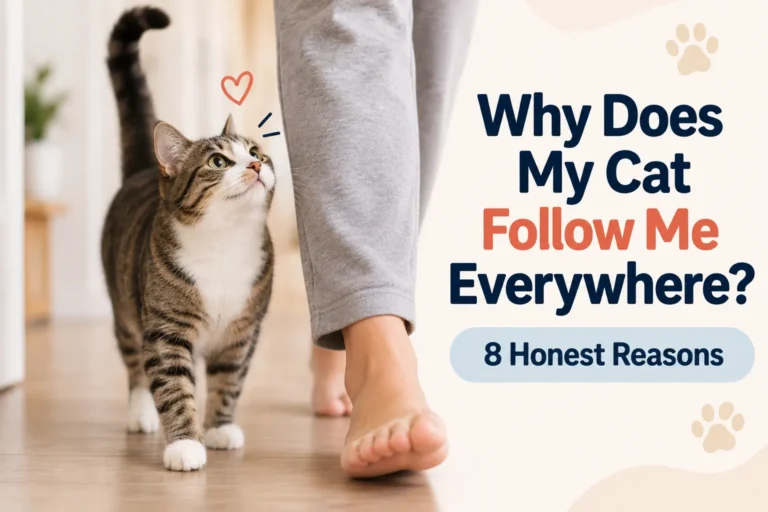
Quick answer: Cats follow their owners mainly out of attachment and curiosity. Research shows most cats form secure bonds with their humans, similar to dogs and infants, and following you is part of that bond. Other common reasons include food anticipation, routine, wanting play, and simple territory patrol. Sudden clingy following that is new for your cat can signal anxiety or illness.
Into the kitchen, into the bedroom, into the bathroom where privacy goes to die. If your cat trails you from room to room, you own what cat people call a velcro cat, and the reputation of cats as aloof loners takes another hit.
The science is on your cat’s side. A 2019 Oregon State University study found that around 65 percent of cats form secure attachments to their owners, roughly the same rate as dogs and human infants. Following you is one of the ways that attachment shows. Here are the eight reasons, from the sweet to the practical.
8 reasons your cat follows you everywhere
1. Genuine attachment
You are your cat’s safe base. Securely attached cats stay near their person, check in with glances, and relax more when you are in the room. The following is not neediness; it is the feline version of wanting to be around someone you like. It often comes with the upright greeting tail we covered in cat tail language.
2. Curiosity about what you do
You are the biggest event in the house. Doors open for you, food appears near you, water runs when you touch things. Cats monitor their territory, and you are the most active part of it, so following you doubles as patrol duty and entertainment.
3. Food anticipation
The most practical reason. If the following intensifies near meal times and ends at the food bowl, your cat is escorting you toward its main interest. Many cats follow, then run ahead toward the kitchen, then look back, the classic follow me move that often comes with the trill we described in why cats chirp.
4. Routine and habit
Cats love predictable patterns. If your morning follows a script, wake, bathroom, kitchen, coffee, your cat learns the script and walks it with you. The following becomes part of the ritual itself.
5. Wanting play or attention
A cat with unspent energy follows you as an invitation. Look for the hooked question mark tail, quick pounces at your feet, or a toy dropped in your path. Ten minutes of wand play usually converts the shadow back into a napper.
6. The bathroom mystery
Cats follow owners into bathrooms for a mix of reasons: closed doors are unacceptable, the room is full of interesting smells and cool tiles, and you are seated, still, and available, which makes you perfect for attention. There is no deep secret here beyond a cat that wants access to you and to every room you occupy.
7. Anxiety or insecurity
Some following is need rather than want. Cats that follow desperately, vocalize when you leave rooms, and cannot settle unless touching you may have separation anxiety. It is more common in cats rehomed multiple times, weaned early, or living through household changes like moves, new pets, or new babies. The excessive vocalizing side of this appears in our guide to why cats meow so much.
8. Illness or aging
A previously independent cat that suddenly becomes clingy may be feeling unwell, since some cats seek their person when sick, and senior cats with fading senses or cognitive changes often stick closer to their human anchor. New clinginess in a cat over 11, especially with night yowling or disorientation, deserves a vet visit. Our cat age calculator shows which life stage your cat is actually in.
Healthy following vs anxious following
| Signal | Healthy attachment | Possible anxiety |
|---|---|---|
| When you leave a room | Follows casually or stays put | Cries, scratches doors, panics |
| Body language | Relaxed, tail up, explores nearby | Tense, tail low, glued to you |
| When you are gone | Sleeps, plays, eats normally | Refuses food, over grooms, soils outside the box |
| Settling | Naps in the same room as you | Cannot settle unless touching you |
| History | Lifelong pattern | Sudden new behavior |
🐱 What is your cat trying to say?
Combine the following with tail position and sounds in our free Cat Language Translator and get the most likely meaning in seconds.
Try the Cat Language TranslatorShould you do anything about it?
If the following is relaxed, enjoy it. You have a cat that likes you, and no training is needed for affection.
If the following tips into anxiety, build independence gently:
- Never punish or push the cat away. Rejection increases insecurity and clinginess.
- Create rewarding spots away from you. A window perch with a view, a heated bed, or a food puzzle gives your cat good reasons to settle solo.
- Schedule daily play. Two ten minute wand sessions burn the energy that fuels shadowing and build confidence.
- Keep exits boring. Leave and return without ceremony so departures stop being events.
- For severe cases, with crying, soiling, or over grooming when you leave, talk to a vet about separation anxiety, since a treatment plan and environmental changes genuinely help.